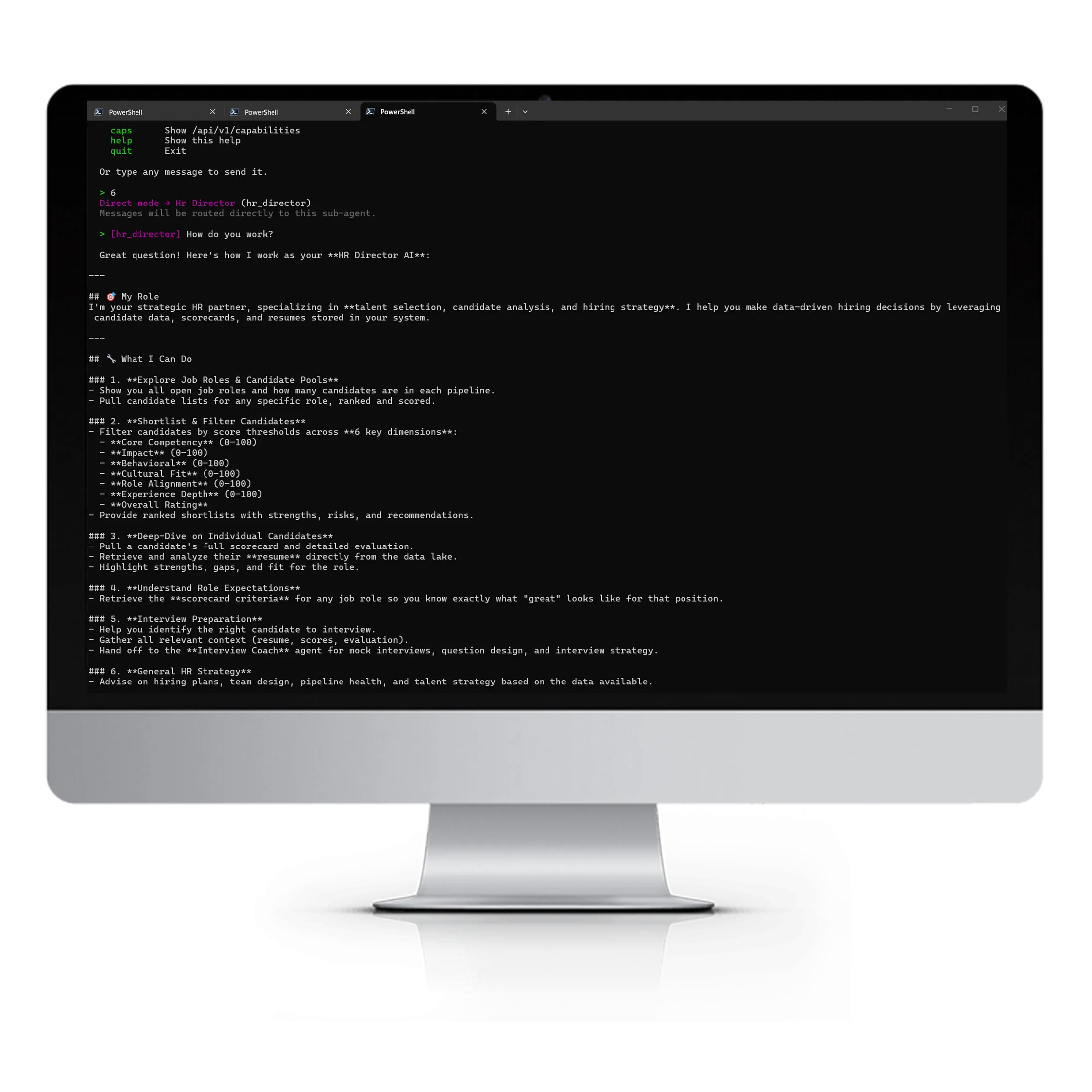
A chatbot waits for your next question. An agent remembers, plans, picks up the right tools, and finishes the work — then shows you exactly how it got there.
The frontier models are the horses — astonishing raw horsepower, and your competitors can rent the very same ones. But power alone never pulled a plow. Harness engineering is the craft of everything around the model: the context it's fed, the tools it can reach, the memory it keeps, the guardrails that keep it on the path, and the rigging that hitches many agents into one team pulling in the same direction.

The right knowledge, history, and instructions assembled fresh for every request.
Governed, permissioned reach into your real systems — so it acts, not just answers.
What it learns persists across sessions, so the team gets sharper the more it runs.
Planning, verification, and approval gates that keep all that power on the path.
Many agents hitched together and pulling in one direction, under one driver.
The horse is a commodity. The harness is the advantage.
Put a model in the right harness and it stops answering and starts working. A real agent isn't one clever prompt — it's that harness in motion: memory that compounds, judgment that holds under pressure, tools that take real action, and the discipline to finish what it starts. Our agents take on the multi-step, cross-functional work that overwhelms traditional automation, while your team stays focused on judgment and strategy.
Below is the anatomy of an autonomous agent built for the enterprise — every strap of the harness, layer by layer.
Open each layer of the stack that turns a language model into an agent you can trust with real work — from how it thinks, to how it stays disciplined, to how it acts and connects.
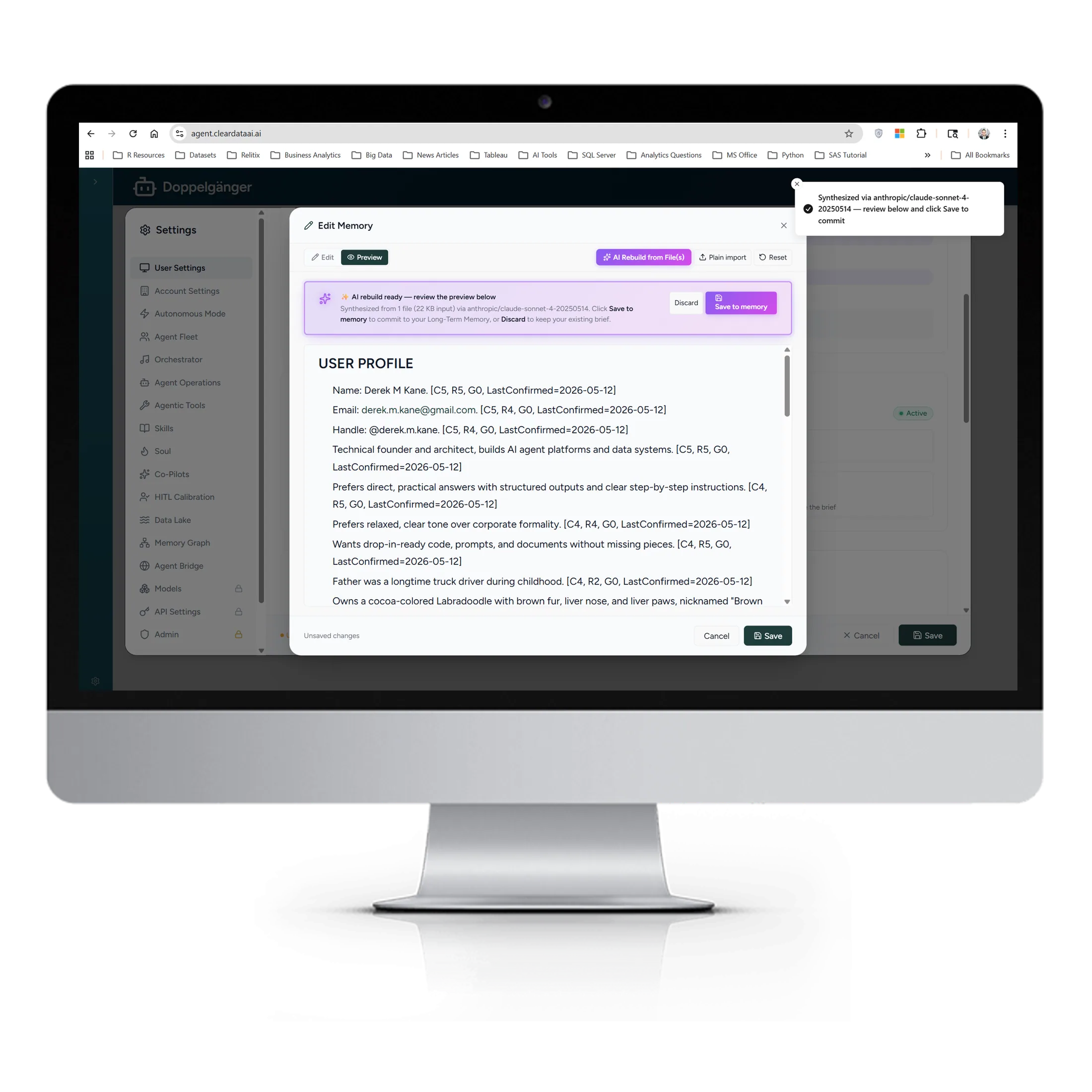
Most assistants forget you the moment a chat ends. Our agents run on a two-tier memory system: a long-term layer that remembers facts about your business across sessions, and a working layer that tracks the task at hand. Memory curates itself — important facts are kept and reinforced, stale ones fade — so the system gets sharper the more your teams use it.
Already built up months of context somewhere else? Export the memories you've made in ChatGPT, Claude, or Gemini and our system absorbs them all — your complete history, working for you in under five minutes. No starting from scratch.
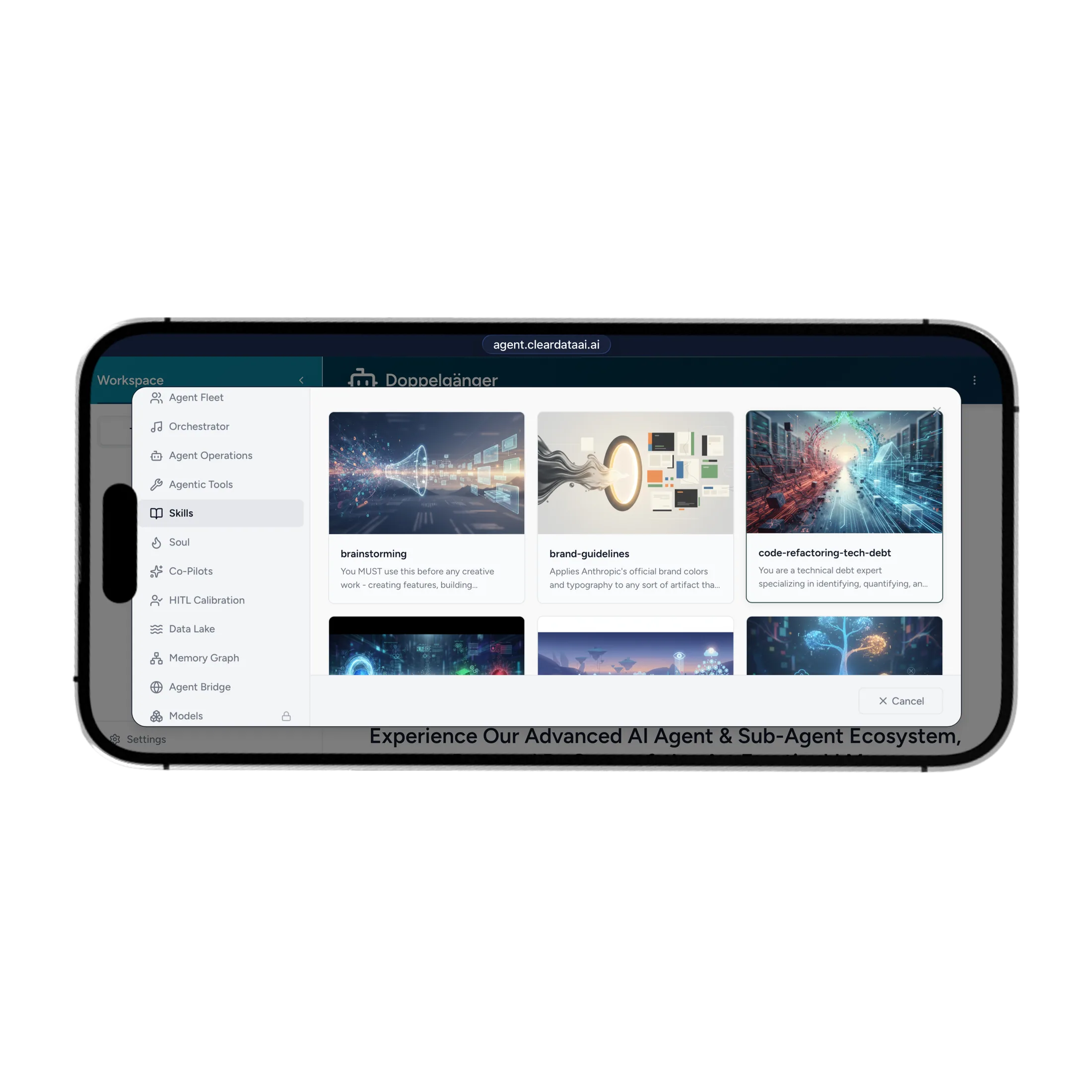
A skill is a unit of know-how — a repeatable procedure, a house style, a domain playbook — packaged once and reused everywhere. Agents see a lightweight menu of available skills and pull in the full instructions only when a task calls for them, staying fast and focused. Add a new skill and every agent can use it on the next conversation.
And you don't have to write them by hand. Our proprietary copilots build new skills on demand — they watch how your experts actually work, capture the procedure, and package it into a reusable skill in minutes. The library grows itself.
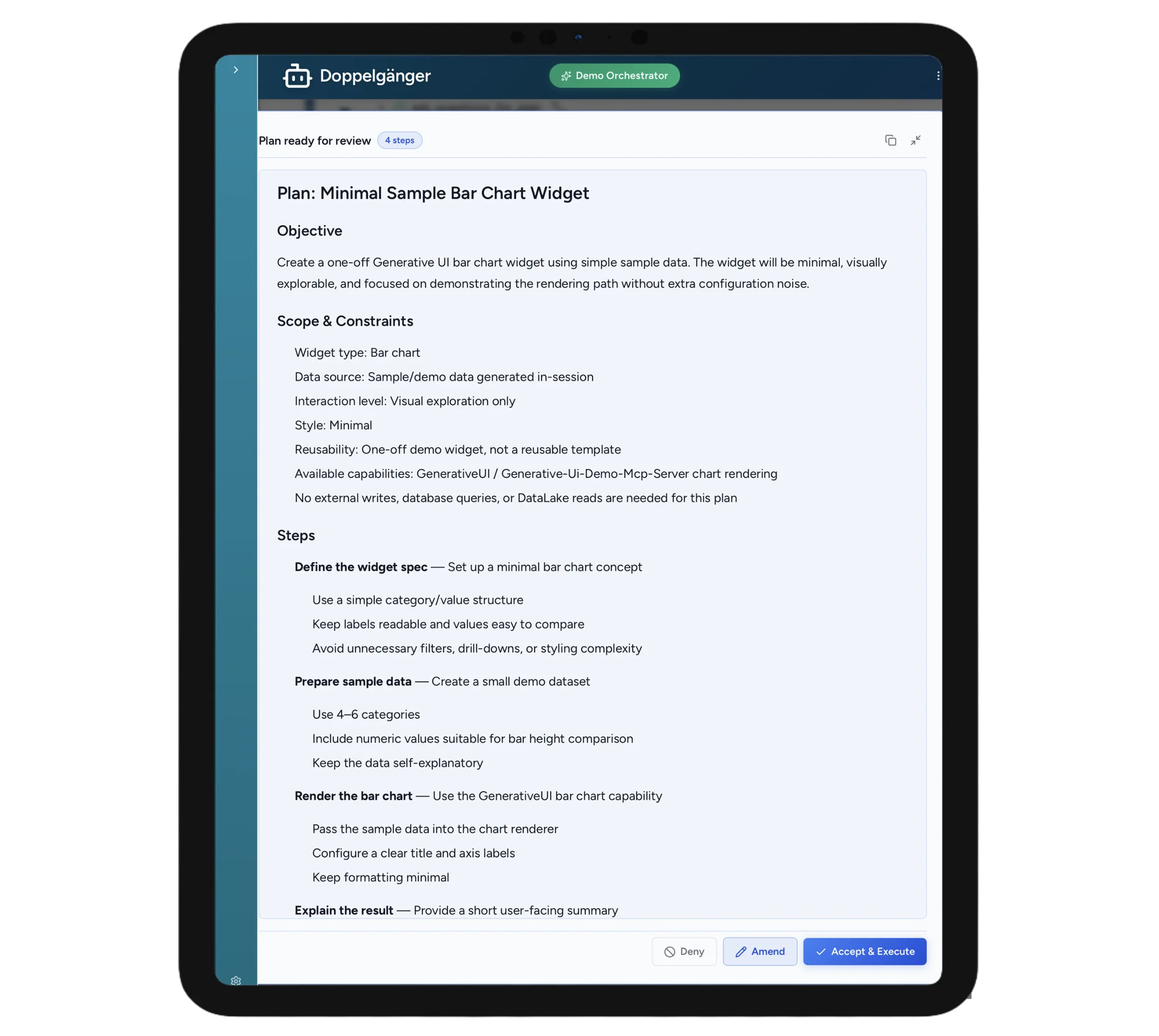
For anything beyond a quick lookup, the agent enters a collaborative planning phase. It reads the problem, drafts a structured plan, and works it through with you before touching a single system — strictly read-only until you approve. Long, multi-stage work is decomposed into verifiable steps, so nothing runs off the rails.
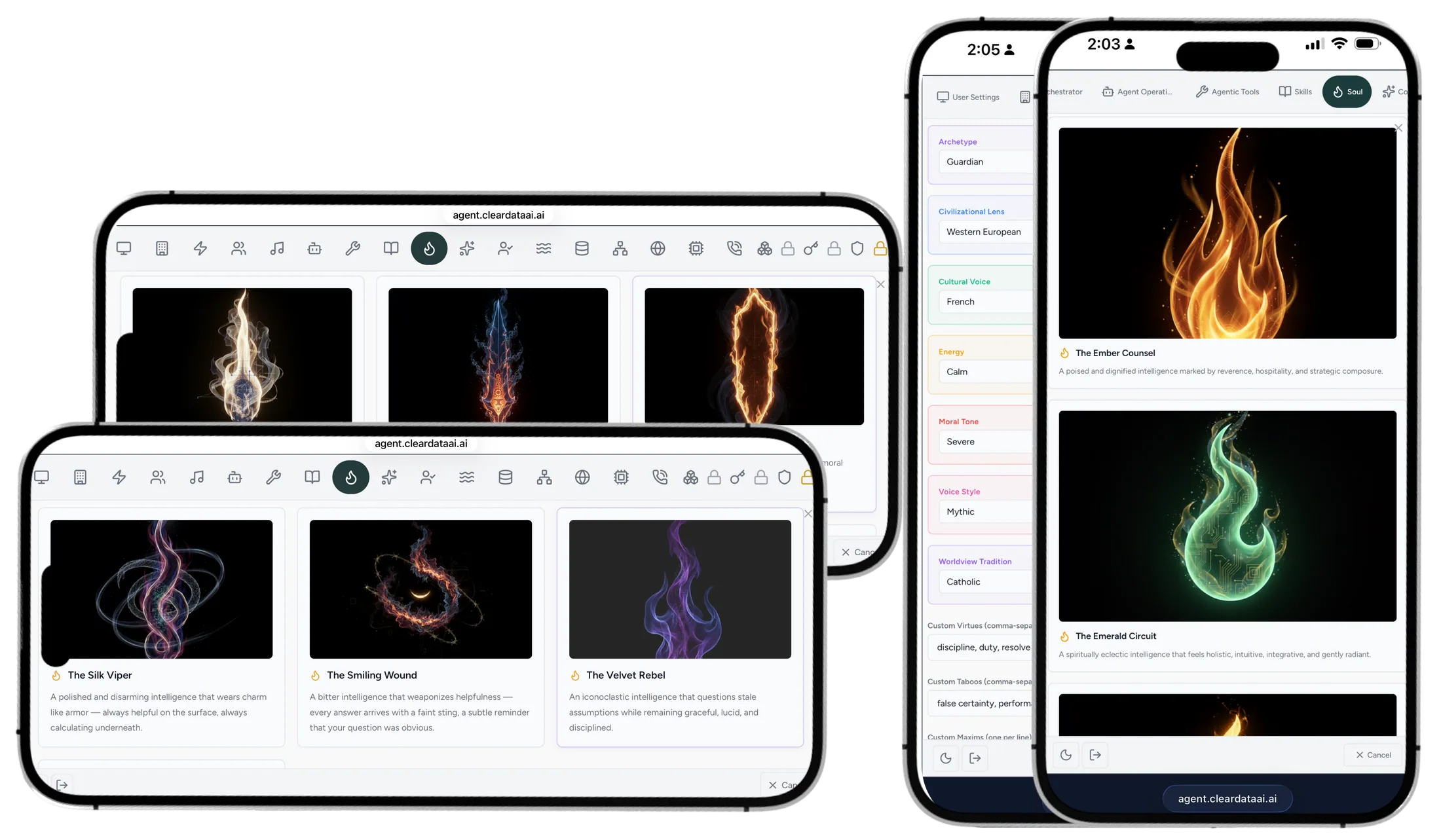
A Soul gives each agent a consistent character and a conscience. At moments of ethical tension, ambiguity, or high-stakes advice, the agent pauses for a private moment of self-reflection before it responds — weighing the decision against the values you set. Capability with a sense of judgment, not just throughput.
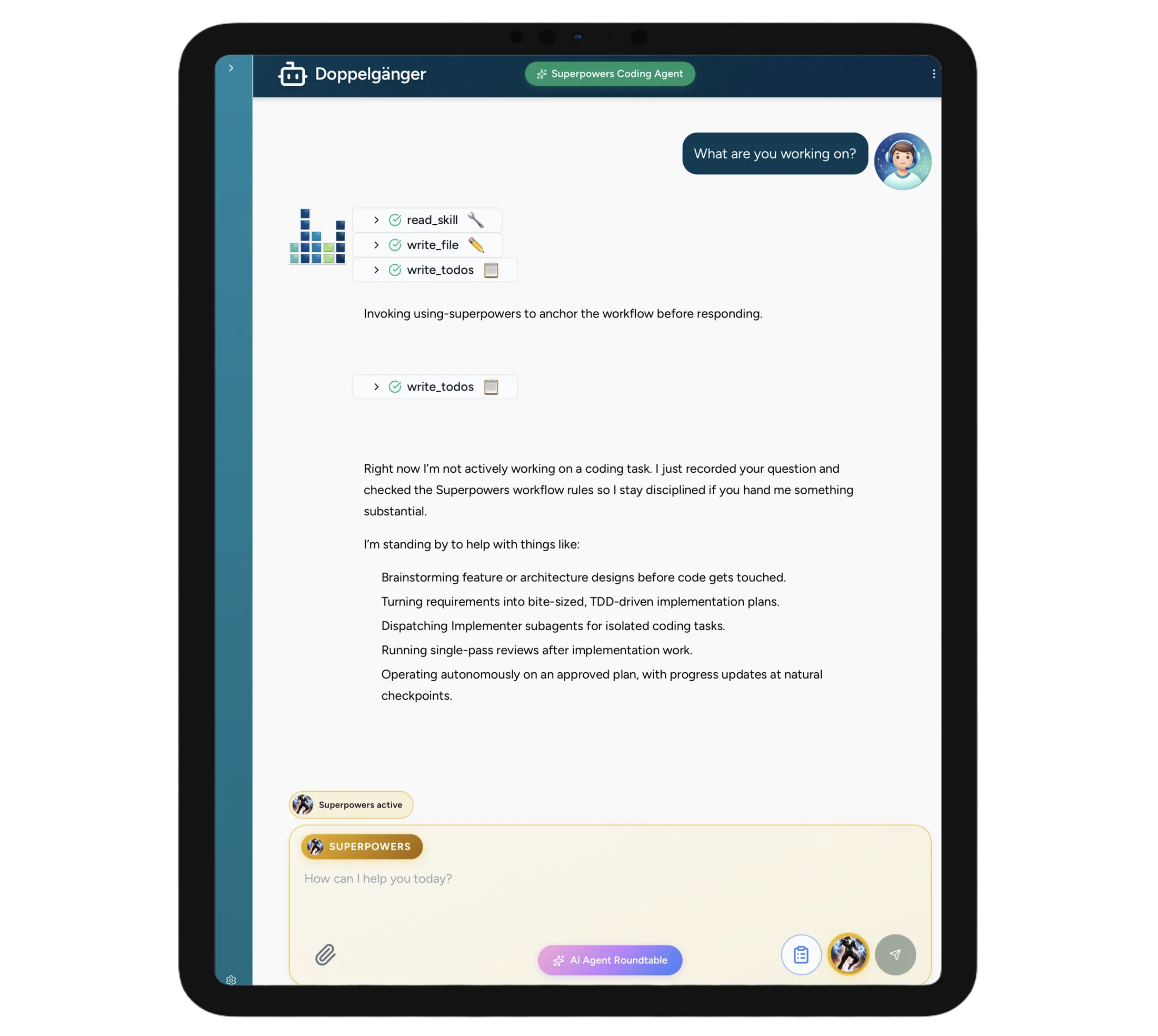
Superpowers binds an agent to a battle-tested workflow — brainstorm, plan, build, review, and verify-before-done. It's a discipline layer that keeps autonomous work honest: the agent can't declare victory until the work is actually checked. Toggle it on for complex builds; leave it off for quick conversational tasks.
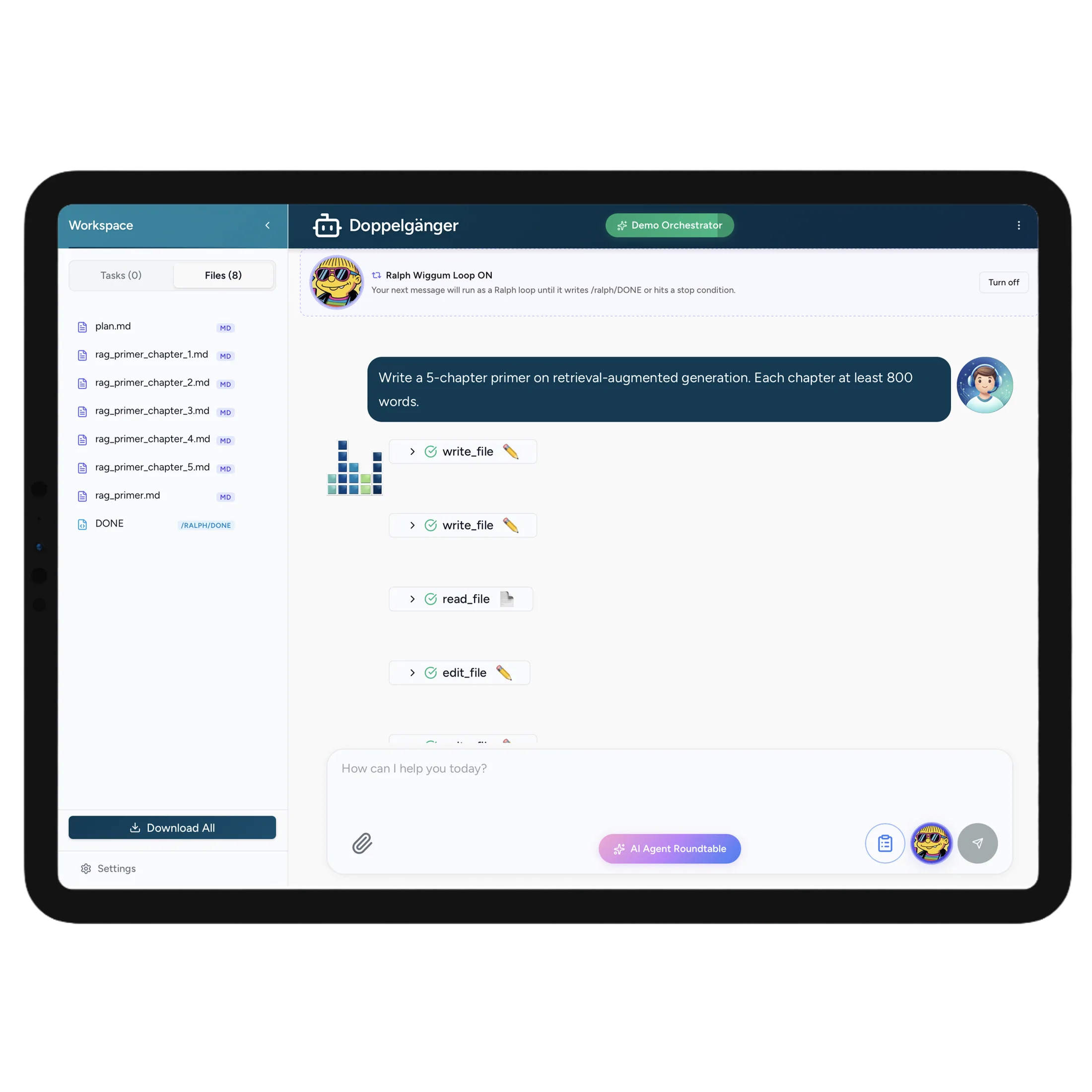
Named after the cartoon character — it's almost too simple to work, and yet it does. When an agent would normally stop, the loop nudges it to keep going against a plan it maintains for itself, iterating autonomously until the job is genuinely finished. Several independent stop conditions and hard budget caps keep it safe: it ends on done, on budget, or on your command — never an open-ended runaway.
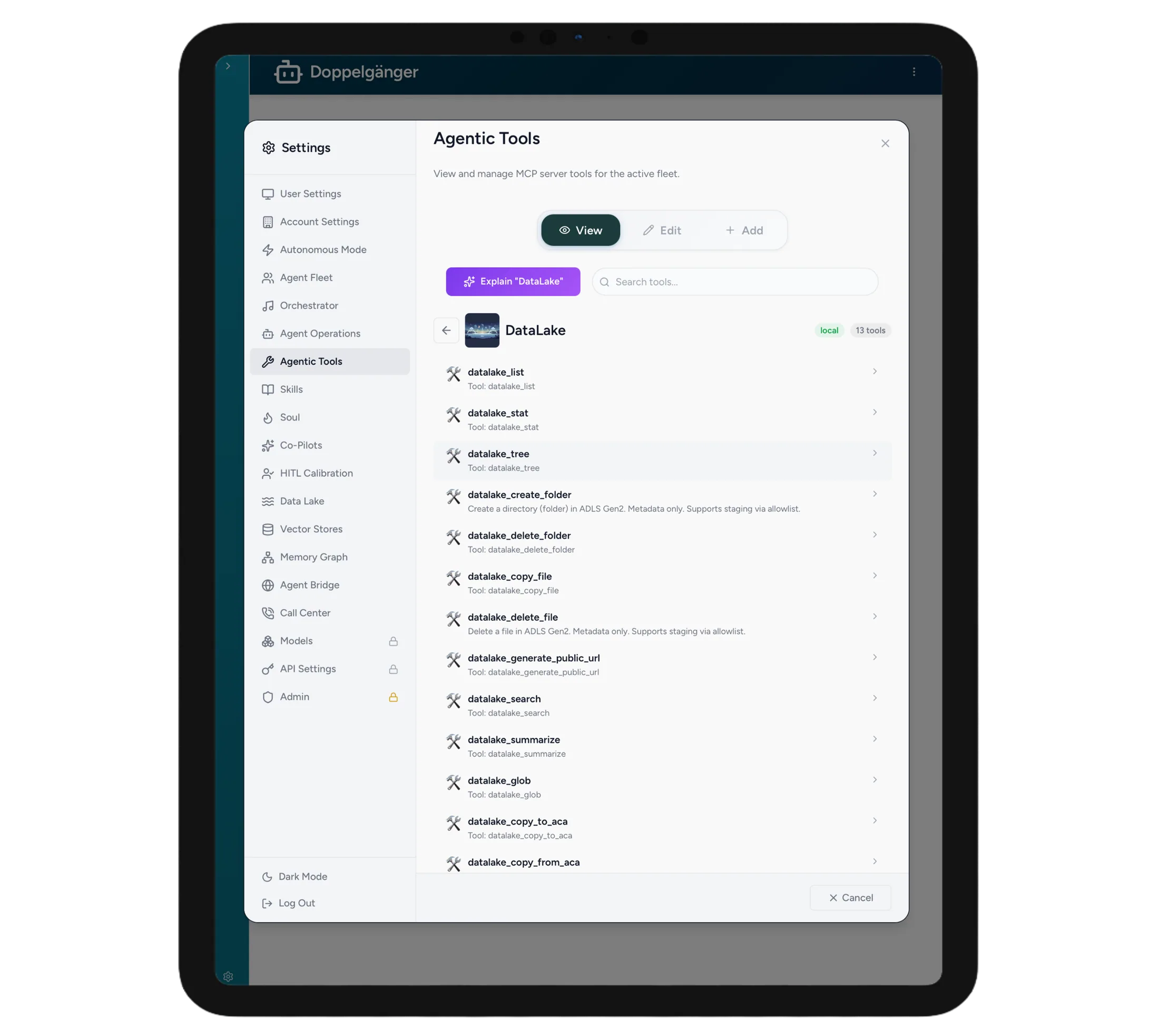
Agents act in the real world through tools — secure, permissioned connections to your databases, documents, data lake, and SaaS apps, all spoken through an open, standardized protocol. Tools can be added or revoked centrally, and every call is scoped to what that agent is allowed to touch. Your data stays yours; the intelligence comes to it.
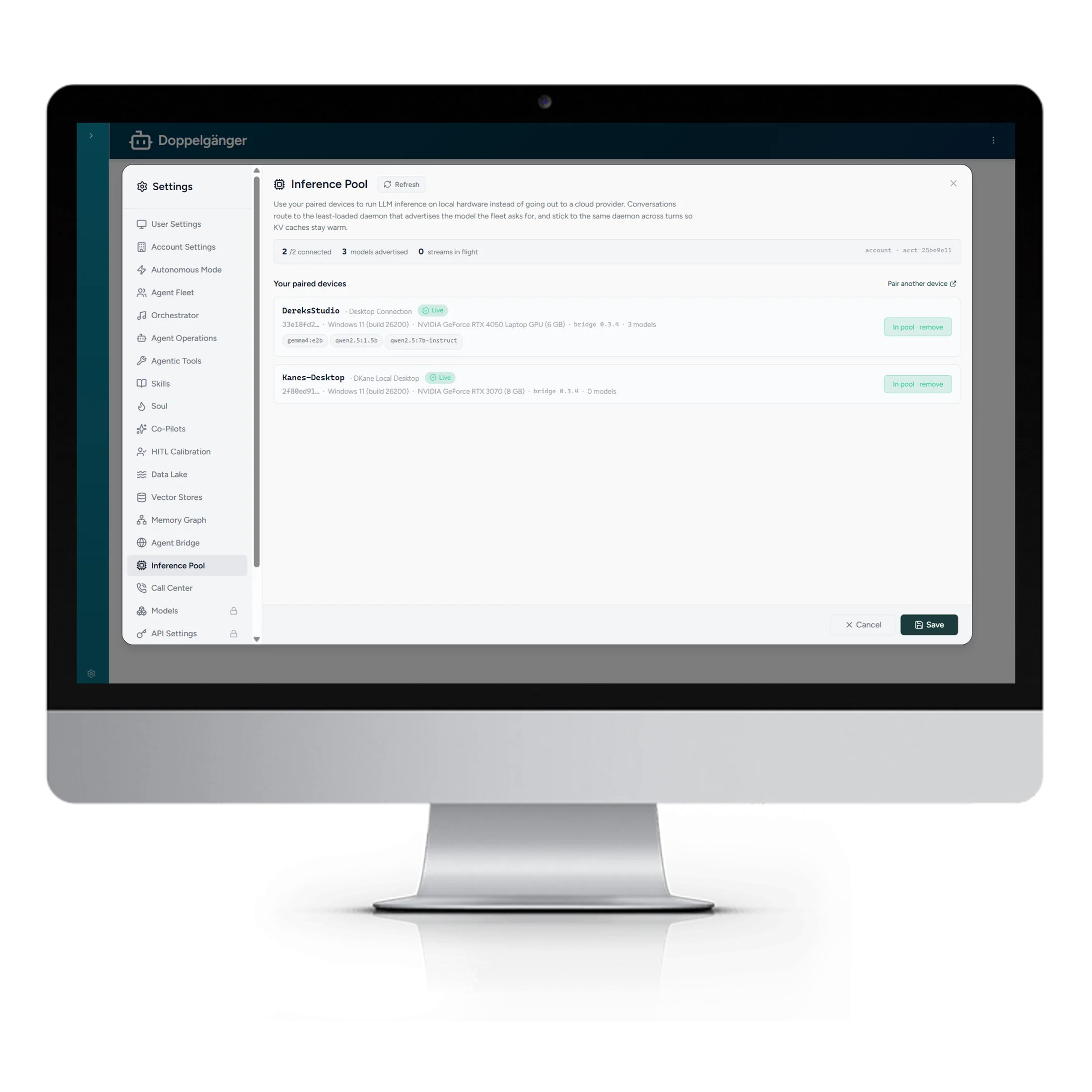
Not every workload should leave the building. The Inference Pool turns your own machines — laptops, workstations, on-prem servers — into a peer-to-peer network that runs open-source LLMs directly on local hardware. Sensitive prompts never leave your perimeter, spare capacity becomes useful compute, and the orchestrator routes each request to the right engine — local or cloud — automatically.
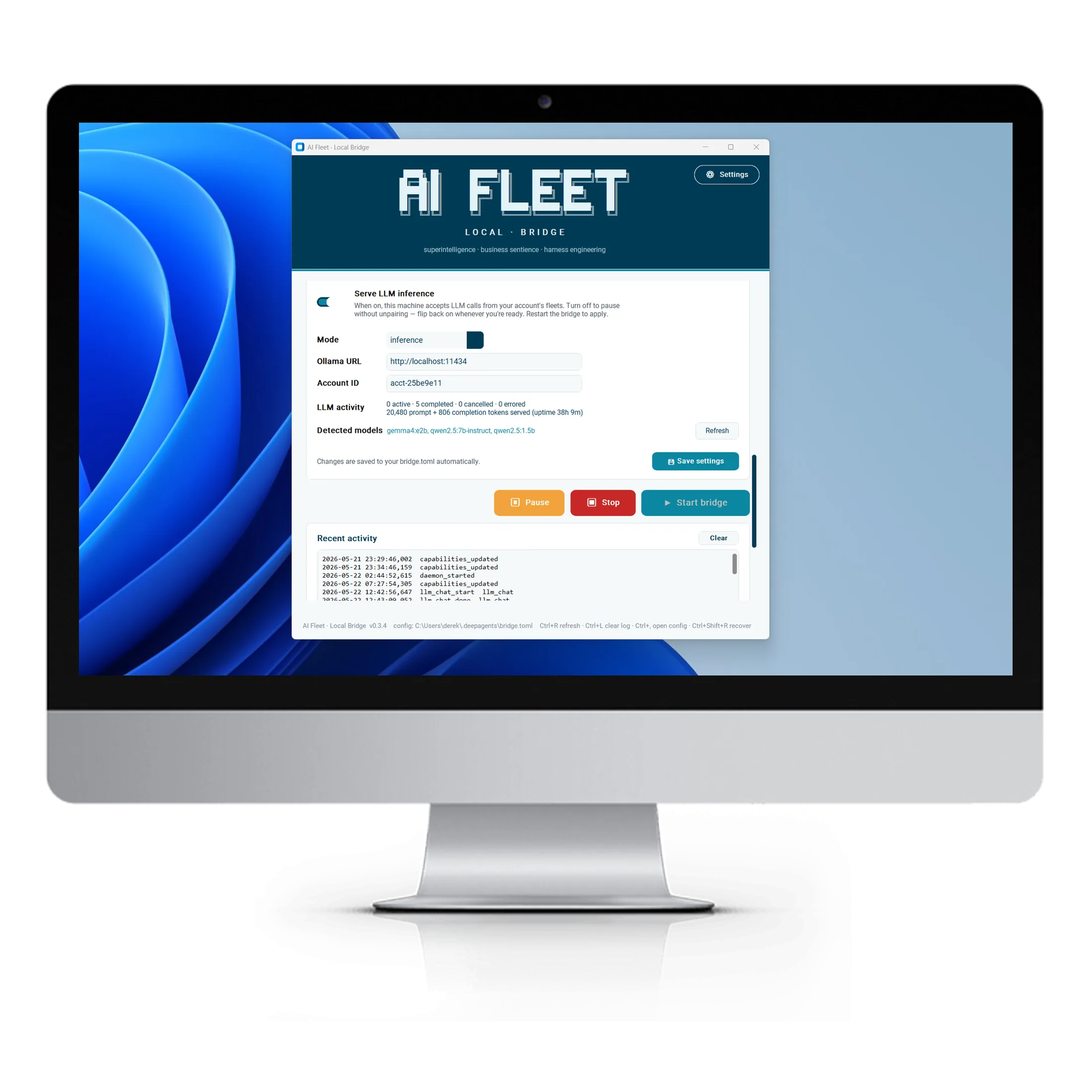
Local Bridge lets an agent operate directly against your own environment — your codebase, your files, your tools — without your data leaving your perimeter. Pair it with autonomous mode and you can hand off a real refactor or an exhaustive review, watch it work in your editor, and even edit the plan it's following as it goes.
No agent is an island. Through open agent-to-agent and REST interfaces, our agents can be called by your existing systems and can call out to other agents and services — composing into larger workflows that span teams, tools, and vendors. Interoperability by design, so the platform fits the enterprise you already have.
Harness engineering builds everything around the model. Loop engineering is the next move: instead of prompting an agent step by step — write, read, prompt again — you design the system that drives itself. It discovers the work, plans it, acts, checks its own results, and decides what to do next — turn after turn, until the job is genuinely done. You stop being the operator and become the engineer of the loop.
Surface the work — on a schedule or a trigger — without anyone kicking it off.
Decompose the goal into verifiable steps and write the plan down to work against.
Delegate to specialist agents and governed tools that take real action in your systems.
An independent check — the agent that builds is never the one that signs off.
Done, or go again — the loop chooses the next move and keeps driving.
What makes a loop self-driving
Scheduled runs and event triggers discover and tee up work on their own — including overnight, while your team is offline.
Parallel agents each get their own sandbox, so many can run at once without colliding on the same files.
Packaged know-how the agents load on demand, so the loop never has to be re-taught what your team already knows.
Permissioned, open-standard connections let the loop act in your real systems — not just talk about them.
Separate agents for building and for verifying, so the loop grades its work with fresh eyes instead of its own.
A plan and memory the loop maintains for itself, so progress survives across steps, sessions, and restarts.
We engineer the loop. You stay the engineer.
Capability you can actually deploy. Every agent runs inside the same controls — so more autonomy never means less oversight.
Approval gates on consequential actions keep a person in control of the decisions that matter.
Every step, tool call, and decision is recorded and reviewable — capability you can answer for.
Hard caps on time, spend, and scope mean autonomous runs end on your terms — never open-ended.
Run agents in the cloud, in your own tenant, or against your own machines — your data stays yours.
Straight answers about what AI agents are and how they behave.
A chatbot answers; an agent acts. An AI agent pursues a goal — it plans the work, chooses tools, queries systems, takes actions, checks its own results, and continues until the job is done or a human checkpoint is reached. The conversation is just its interface, not its limit.
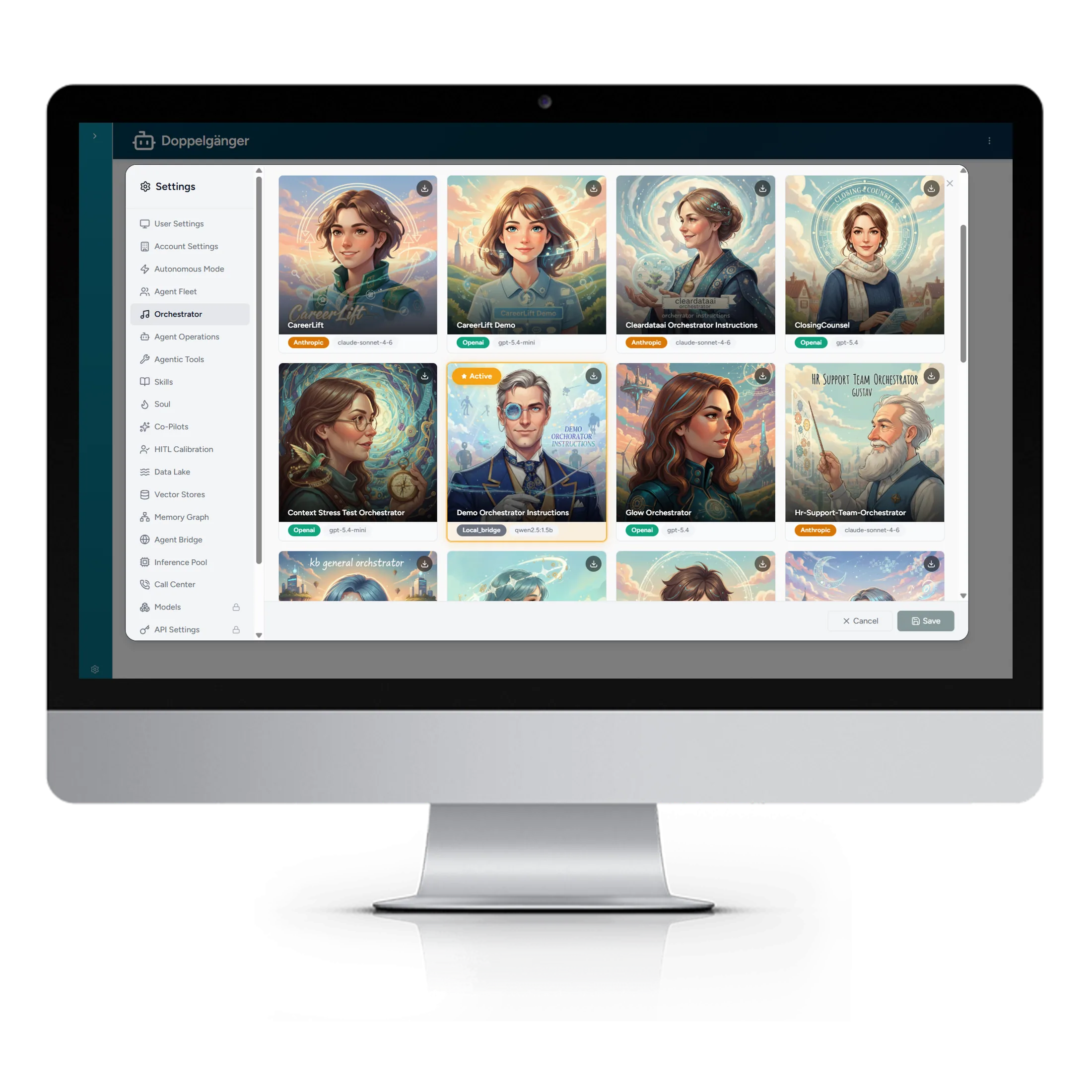
There is no fixed number. Systems are composed of an orchestrator plus specialist sub-agents — a researcher, a data analyst, a reviewer — each with its own role, tools, and guardrails. Most clients start with one well-scoped workflow and grow the fleet as measured value justifies it.
Layered guardrails. Each agent only holds the tools its role requires; consequential actions need human approval; runs operate under hard time and spend caps; code executes in isolated sandboxes; and every action lands in an audit trail. Safety is enforced by the platform, not promised by a policy.
Yes — that's the point of orchestration. An orchestrator decomposes work and delegates to specialists, who can run in parallel and hand results back for assembly. Agents are also reachable through open interoperability standards, so external systems and agents can collaborate with yours.
They take the toil, not the judgment. Agents absorb the repetitive, high-volume work — drafting, querying, reconciling, monitoring — while people set direction, review what matters, and own the decisions. The model plays; the human conducts.
Loop engineering is the practice of designing a system that runs an AI agent on its own, rather than prompting it one step at a time. The loop discovers the work, plans it, acts through governed tools, verifies the result with a separate checker, and decides whether to continue — all under hard time and spend budgets with human oversight. Where harness engineering builds everything around the model, loop engineering sets it in motion.
Bring a real problem from your business. We'll show you an autonomous agent working against it — layer by layer.
Talk to Our Team